(Phone notes by Sarah Lou)

Periodically I clear enough space to fit my life into a backpack. I like the sense of freedom and opportunity that living lightly gives. You learn a lot too.
When you pack your life into a backpack, it’s surprising what you do and don’t need.
As I’ve pursued a freelance business that moves as much as I do, there are three things I’ve found incredibly difficult to clear out.

The first was my vinyl records. I cried when I took them to a local record shop in exchange for cash. But someone else will love them, and that record collection helped me build this website.
The second hardest thing to part with was my photo albums. It goes without saying that you can revisit the same place with the same people at the same time, but you will never quite capture the same photograph that makes you laugh or cry when you look at it.
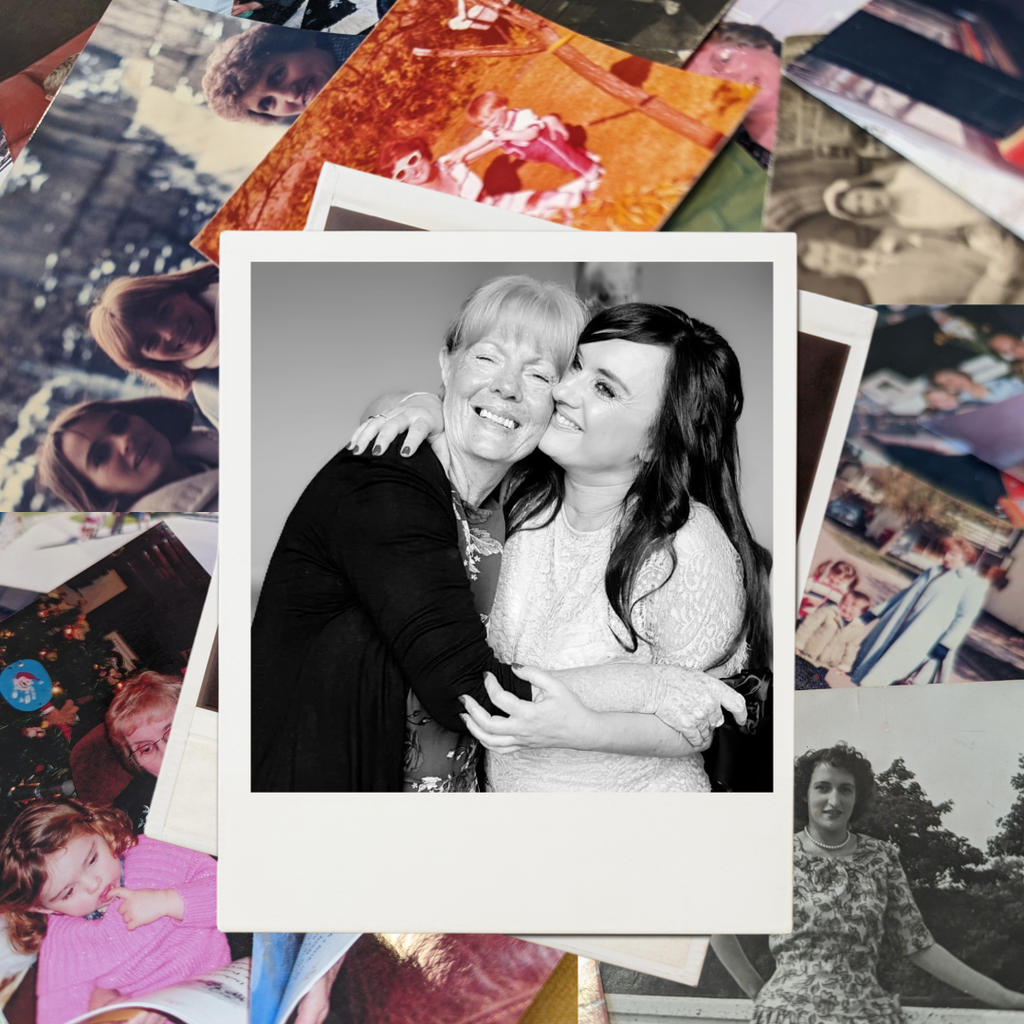
While I’ll never fully part with memories of the past, I am increasingly interested in what happens when we shift our focus to memories that we’ve yet to create. And that means mastering the skill of letting go. Trevor Owen’s photography has helped me do that. By defining hope and purpose.
Through a time of constant change, what stays with me is a suitcase full of journals. Dating back to childhood in the 80s, right through to present time, my ramblings are my way of processing the world around me and have become the cornerstone of my professional life too. I’ll never read them all or transcribe them but there’s something uniquely special about original thoughts written on paper that I just can’t part with.
As I flick through the pages, I can’t help but notice that some of the mistakes I made as a young adult, I’m still making now. I’m learning to embrace the impermanence of life and reframe imperfection, but there’s no doubt about it, learning is hard.
One question I have often asked myself is this:
Is learning good for us?
Not always, it seems.
While learning is one of the five ways to wellbeing and statistically proven to be good for our health, the act of learning too much too quickly, in a way that is counterproductive to our nature, can absolutely batter our mental, physical, financial, emotional and social health.
For a little context, below is an extract from my diary as I learnt the hard way that conventional employment wasn’t working for me.

Poised in my swimmers’ fleece, I shuffle onto my laptop
Sarah Lou
to check what I have on today.
I won’t be swimming, that’s for sure. My head and body feel so heavy
I can hardly brush my hair.
Words fall down the screen.
I need to write. If I can’t write, my mind will surely break.
This isn’t the first time I’ve felt like this. Room spinning like a teacup, ears ringing louder than a fire alarm,
limbs so heavy, I swear the air is mud.
Just last week I was nailing it. Juggling caseloads of high-profile clients and supporting the team.
Why do I go from full throttle to burnout, with no in-between?
Maybe it’s the lack of ‘in between’ that is the problem.
We’re squeezing dry the best of life,
when we omit time to dream.
The irony is not lost on me that while specialising in comms for wellbeing, my own wellbeing took the biggest hit.
So what was the tipping point? And how do we achieve the holy grail of work-life balance?

Balance looks different to each of us. And I can’t say I have it figured out. But I do know that success for a creative person is linked to the way we think, feel and communicate, far more than performance data.
Choosing fast isn’t winning. And neither is choosing ‘easy’.
The most challenging times are the most telling about who we are and why we make the choices we do. We need to do the hard stuff. But we need time for dreaming too. For some of us, being still with our thoughts is where the real work happens.

On The High-Performance Podcast, Jimmy Carr reflects on the importance of creative learning as a life-long process. His definition of success isn’t directly linked to metrics; it is linked to whether you keep doing what you feel that you can’t not do. It seems the secret to success is mastering your obsession, and learning to let go of what your obsession isn’t.
To paraphrase Jimmy Carr’s words, my takeaway is this :
Failure is an earlier exit from the same path to success.
Jimmy Carr (paraphrased from spoken word)
Keep doing the thing that you can’t not do. And collect receipts. Prove you can do it. Even when you you’re not very good at it. Even when imposter syndrome kicks down the door to your mind and announces: “Yeah but that was two years ago, it won’t work now”. Prove it does work, by doing the thing you’re meant to do. And do it enough. Not in exactly the same way. Don’t repeat old mistakes. Learn from them.
But don’t give up doing the thing.
One day, if you’re lucky, and you ride the wave longer than most would,
you’ll realise you shifted from Rookie to Premier League.